What Rust really demands from a solo player with 14,782 hours compared to a fresh wipe start
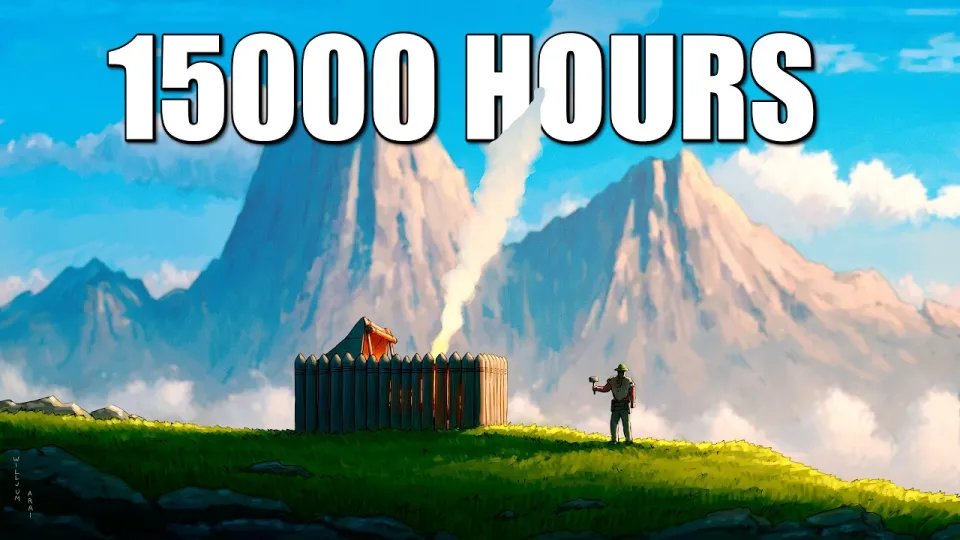
You can order the same kind of articles for your own video to boost it on YouTube and Google. Just message the Telegram bot @sat_sit_bot. It writes articles around your video, embeds the video and publishes them on popular niche websites (no ads). Your first 50 articles are free.
· based on the channel Willjum
Key takeaways
- Willjum's solo account has logged 14,782 hours in Rust, roughly 1,180 hours per year if spread across 12.5 years of play.
- The run is played on official vanilla Rust servers, not modded or low-pop community wipes.
- The base in the video was designed by builder Luca.Builds and includes a mannequin decoy placed in a window.
- A full wipe progression for a solo runs from a starter 2x2 through green card monuments to tier-two weapons and raiding.
- 14,782 hours equals about 616 full days of in-game time, close to seven years of a full-time job.
Rust rewards the solo player who treats every hour as a resource: a 14,782-hour veteran survives an official wipe by building small, spending scrap only on blueprints and tools, and picking fights on their own terms, while a fresh solo loses a 2x2 to the first duo that hears a door. The gap is not aim; it is routine, map reading and knowing exactly when not to shoot. Veterans also tend to run the same small set of consumables and gear they can replace in minutes, and that habit scales down to any playtime budget. The video breakdown below comes from Willjum, whose channel documents exactly this kind of long-form solo wipe, and the sponsor offer for the beard trimmer shown in it lives at the Manscaped page for Willjum viewers.
What 14,782 hours actually means in Rust
14,782 hours is about 616 full days of play, and if the account started around Rust's early access period it averages roughly 1,180 hours per year. Spread over a full-time work year of about 2,000 hours, that is close to seven and a half years at a job. For a solo on official servers this translates into map knowledge that removes most of the guesswork: which monuments feed a green card run, where sulfur nodes cluster, how long a raid usually takes to arrive after a base is scouted. None of that is mechanical skill, and most of it can be learned faster than the raw number suggests by watching a wipe end to end instead of highlight clips.
How a veteran solo structures an official wipe
A long-hours solo treats the first day as a checklist rather than a race. The pattern in these runs is consistent:
- Spawn, gather enough wood and stone for a tool cupboard and a small starter, and place it away from the busiest roads.
- Push a green card monument for basic components and scrap before touching tier-two gear.
- Convert scrap into blueprints and workbenches first, weapons second.
- Expand the base only after the loot inside is worth raiding.
- Keep a second stash or a hidden backup box for the wipe day when the main base falls.
On official vanilla servers the population is high and the wipe cycle is weekly or monthly, so the cost of a bad base location is measured in hours, not minutes. Small footprints, stone or sheet metal upgrades early, and airlocks with two doors remain the standard because they buy time rather than safety.
Base design and decoys that buy minutes
The base shown in the video was built by Luca.Builds, and one detail gets reused by viewers: a mannequin placed in a window. A silhouette in a window draws fire and attention while the player moves elsewhere, and it costs almost nothing. For a solo, base design is mostly about misdirection and compartmentalisation: a shooting floor that forces attackers into a narrow angle, loot split across rooms so one breach does not end the wipe, and a front door that looks more valuable than it is. Builders who publish step-by-step layouts are worth following because copying a proven footprint is faster than inventing one under pressure.
Scrap discipline and the weapon trap
Scrap is the real currency of a solo wipe, and the most common mistake is spending it on guns before the means to replace them exist. A player who says they avoid buying weapons but crafts a nail gun for the twentieth time is describing the actual economy of solo Rust: cheap, replaceable tools until the blueprint tree and the workbench tier justify better gear. Practical rules that hold up on official servers:
- Buy workbench tiers and key blueprints before any weapon.
- Craft crossbows and nail guns in batches; they are lost constantly.
- Keep a reserve of scrap for a tier-two bench rather than a single rifle.
- Spend on meds and syringes before armour.
PvP timing, sound and the bear problem
Veteran solos win fights by choosing them. The pattern in long-form solo content is ambush over duels: wait for a group to commit to a monument, hit from an angle they are not covering, and leave before the third player arrives. Hearing matters more than reflexes, which is why a player who tracks footsteps across a field can still be caught out by wildlife, and bears remain a genuine cause of death in every wipe. The practical takeaway is to treat audio as a two-way channel: if footsteps carry that far, so does gunfire, and every fight announces a location.
What viewers keep asking about long solo wipes
Three doubts come up again and again under these videos. The first is whether the hours are real, and the arithmetic above shows how a long-running account reaches five figures without anything unusual. The second is whether the calm farmer persona is genuine, when the same player clearly takes fights and wins them; the honest answer is that both are true, and the peaceful framing is a style choice rather than a claim about skill. The third is whether the game is worth playing at all for someone who only watches, and the variety of content, from base builds to raid defence, is exactly why many people never install it and still follow wipes weekly.
Links from the video
Conclusion
A 14,782-hour Rust solo is not a different game, it is the same official wipe played with fewer wasted decisions: a small base, scrap spent on infrastructure, fights chosen rather than accepted, and a backup plan for the day the door comes down. Newer players get more from copying that order of operations than from chasing aim. Willjum's channel is the place to watch the full run, and the beard trimmer promotion from the video is still available through the Manscaped link for Willjum viewers.
Source: How a solo with 14,782 Hours plays official rust... · Markdown version
Questions & answers
Is 14,782 hours in Rust actually possible?
Yes. Spread over roughly 12.5 years since early access that is about 1,180 hours per year, and closer to 1,850 hours per year if the account only started at full release. Both figures sit within the range of a part-time or full-time commitment, and idle time logged into the client adds to the total.
Do you need thousands of hours to survive as a solo on official Rust?
No, but you need a routine. Placing a small base away from busy roads, spending scrap on blueprints and workbenches before weapons, and avoiding fights you cannot leave are habits a new player can adopt in the first wipe. The hours mostly remove uncertainty about maps and monuments.
Why do solo players build small bases instead of large ones?
A small footprint is cheaper to upgrade, faster to defend and less attractive to raid. Compartmentalising loot and using decoys such as a mannequin in a window costs almost nothing and buys the minutes needed to respond or relocate.
Is it worth watching Rust videos if you never plan to play?
Many viewers follow full wipes purely as entertainment, because the content ranges from base building to raid defence and monument runs. Watching a complete wipe also teaches the progression order without the cost of losing your own base.